


Below is the next installment of writing lessons from the Stonewood Writing Group. You can read previous lessons here:
If you’d like to join the group and receive these weekly emails, please let me know!

Woman Looking Out A Window Painting by George Albert Thompson
Stonewood Writing Group
Week 35
21 May 2026
Hello, my Writing Friends!
Today we will think and write about sight and images and visual descriptions. Sight is perhaps the sense we default to the most often in our writing. We describe the things we see around us, often without thinking much about the process. As we describe what we do each day, we give that context by describing what we see in our worlds, in our families.
This week, let’s think harder about the process and practice a bit, describing the things you see around you. Be as descriptive and detailed as you can (instead of saying you see a tree, tell what kind of tree it is and describe it).
You might start with your writing place. A good way to begin is to write, “I am looking at . . .” and then just keep writing. Where do you sit? At a table, at a desk, in your bed, by a window? Describe your computer or you’re the journal you write in. Where did you get it, what does it look like, what’s inside of it? Where do you keep it?
About a year ago, in another writing group, my friends and I were answering the prompts in The Book of Alchemy. The second of 100 prompts in that book said, “Write Ten images from your last 24 hours.” I wrote about what I saw around me in my office. As an example, I’ll share with you’re the first few images I wrote about here, in my place, because this is where I write.
I am SO GRATEFUL I recorded the images here a year ago because today NOTHING I described is as it was then. For the last month, I have been packing up my office for our big move in July. I took a few photos, but having these words will always bring me back to my favorite work place.
Here’s what I recorded last year:
I am sitting at my corner desk in my office that is in the middle of our main floor living
area. This is where I do my work. I love my office that is full to the brim of projects and collections and resources for my work. There are no windows in my office, so I have created them with artwork and photos and quotes that hang on the wall in front of me. Today I will describe 10 images that surround me here.

1. I am working right now on my trusted and beloved laptop. This laptop has gone with me to Yakima for 3 years, to Africa for 2 years and to Germany for 1.5 years. It has been my constant companion and receptacle of words and photos that tell the story of my life and of those around me. My laptop is old and tired. The fan whirrs inside it, telling me to slow down and let it rest. The keys on the keyboard are worn off so that I can’t read 14 of the letters or symbols, which doesn’t bother me because I’ve known them by heart for years. The laptop is black, a Lenovo IdeaPad Flex Convertible PC. I had to live without this laptop for 13 days (until last Thursday) after leaving it in St. Louis, where we visited the kids last month. I waited a week after Heidi put it in the mail to me, but it arrived with the charging cord broken off in the laptop so I couldn’t charge it. It took 2 days to find a repair man (after we spent hours trying to remove the broken piece in the receptacle). My life felt undone and exposed in a raw way. My words weren’t accessible to me. I wonder how many prayers I’ve prayed for this computer over the years. Probably 100s.
2. Beside me right now on my desk is a 2″ stack of paper copies of images I took of Family Register Books in the town archives in Leingarten, Germany. Last fall I spent 3 days there, digitizing over 17,000 pages of birth, marriage, death and family registers with my phone’s camera. This 2″ stack is the first pile I’m working with. It contains Family Registers from Grossgartach (now Leingarten) with names beginning with F and going until M. I will go back to the A-E families next. Each two-page spread has a template for husband and wife on the first page with their birth and death dates, their marriage date, their parents’ names, Places are also included. The second page has a list of all of their children, birth dates, death dates, spouses and marriage dates and places. It also includes any illegitimate children born to daughters in this family. Sometimes there are other notes, reporting emigration, or a move from the area. I am going through these pages copied from my digital photos, family by family, comparing them to what’s in FamilySearch, adding all the additional information not found yet in FS. The lives of the people in these records range from the mid-1700s until the mid-1900s. So far, of the 100s of families I’ve worked on, only 3 or 4 are families I’m not related to in some way. These are my people and I am finding and gathering them. I work on this project several hours every day and I love it.
3. Next to my current pile of documents are 2 books, both written by my German Professor, Roger Minert. He taught me to read the old German handwriting that fills these pages. I studied the handwriting for a full semester in 2012, which allowed me to extract the entire town of Grossgartach from the microfilms years ago. All of those people (about 17,000) are in my computer database and were then sent to the temple. The records I am working on now are the civil registries (not those microfilmed church records that ended in 1876). These records are all they could give me within the current privacy rules, so I can gather several more generations. The books are “Deciphering Handwriting in German Documents,” and “Wuerttemberg Place Name Indexes: Identifying Place Names Using Alphabetical and Reverse Alphabetical Indexes.” They are my references when I get stuck on a place or on how a name is written.
4. Behind my laptop are 2 large black computer monitors where I can look at the documents and enlarge them on the screen. (The paper copies I use to take notes on and tag if there is someone I need to come back to–after cross checking a date in a marriage or birth record.) The 2 big monitors are plugged into my laptop, and I can work with the images in front of me. While my laptop was gone, I had to work from the paper copies using a magnifying glass, which is still here within reach.
5. My corner desk with my laptop and monitors is not clutter free. Here are the things filling my space: a box of tissues, a small office desk container of various sizes of post-it notes and tags for marking documents and 2 floss pics for my teeth. Another container holds teeth whitening strips, cough drops, mini lotions and breath strips. There are 2 small speakers that can plug into my laptop if I want more sound as I listen to music as I work. One of them hums. There are 3 cups that hold pencils, pens, markers, a nail file, scissors, and a Malian hippo letter opener. My external drive that contains all that doesn’t fit in my laptop is also right here. On both sides of my laptop are notepads of all sizes (most from hotel rooms) with random names, dates and places I jot down while working on a family. Sometimes I have to do some untangling and I often look at original documents to check to see that indexing is correct. I keep notes as I work. Behind my 2 large monitors in the back corner is a dark plastic stacking file with 6 shelves where I keep things like ward and book club and mission directories. On the top shelf of that stacked file I have a collection of things that I can see over the top of the monitors: A art print of a woman from long ago holding a child in her arms. They are dressed as paupers and they look tired and worn. She represents to me my ancestor women. Next to her is a small round framed photo of John’s German Grandma, Christine Meisel standing in a yard holding a basket of eggs. Next to her is a black ebony Nigerian fertility doll, reminding me of the children I lost. In front of those things is my Harry Potter Time Turner, reminding me that my time will be multiplied as I do family history work. And in front of that is a wooden block with the words: Home is Where our Story Begins. There are lots of cords on this desk right now that I will try to hide someday. On the left is a clear square glass vase like one I used in Germany where I keep completed temple cards. Next to that vase is a chime box Aunt Berta left behind that you can turn over and little metal beads fall onto chimes. It’s relaxing, but seldom used. On top of that wooden chime box sits a chapbook Claire once gave me for Mother’s Day that says on the cover: BEST MOM EVER, and a 2nd Chapbook of one of our Yakima Christmases together. Beside those is a postcard map of Carpenteria and a small copper etching of the Grossgartach Heuchelberg Turm, a memento from Grandma and Grandpa. There is one more framed photo behind my monitors of Mary Ellen Edmunds, my dear friend and mentor. [Today she died and I am sad.]
———————-
After describing my corner workplace, I worked my way around the room, describing the books and piles and messes that stack up around me. I ended up with about 5 pages describing my own little corner office. I’m grateful to have these words. You never know when things will change and your memories will fade.
Here are some fun prompt ideas for your writing this week. Begin by writing, “I am looking at . . . .” and carry on. If you get stuck, just repeat, “I am looking at . . . .” and go again.

Go to these places and describe what you see:
My writing place
Our kitchen table
What’s in our refrigerator
Stepping into the garage
My closet
What I see from my kitchen window
Things in our junk drawer
What’s outside my front door
What’s in my purse or bag
What I see when I look into our backyard
The dashboard in our oldest/newest car
What I see when I drive out of my neighborhood
Think of other things that you’d like to describe in more detail. Practice looking for the details. Practice writing the details. Details are the key to making an interesting journal entry!
If your writing time is limited, just mention something new you see each day, or try to add 5-10 more descriptive words to a normal daily entry. Do that every day this week. You might also start a list of things you’d like to describe in more detail as you have time.
As you do this, it will become second nature and your writing will improve. Enjoy the process!
Ann

a random floorplan
Stonewood Writing Group
Week 36
28 May 2026
Hello my Descriptive Friends!
Good work last week describing what you see around you! This week, we’ll talk about a little different angle–I call it “Memory Images.”
In the book, Tell it Slant, author Brenda Miller says, “what we choose to see or not see often says more about us than anything else. When we ‘look back’ in memory, we see those memories. Our minds have catalogued an inexhaustible storehouse of visual images. The trick is to remember those images in writing.”
This week let’s take your writing back in time to your growing up years. Get out a paper and pencil and draw the floor plan of a childhood home. Walk around in that place for a bit and notice how the memories associated with that place begin to flow. We’ll return to this exercise in the future, but this week, I want you to walk into your childhood bedroom and sit down on your bed. Close your eyes then open them in your mind. Look around you. Describe what your memory sees. It may help to say, “I am looking at . . .” like we did last week, but this time your are looking at memories.

My childhood bedroom.
It may also help to pretend you are describing your room to one of your kids or grandkids who never saw it. What would be interesting to them? Here are a few ideas you might write about:
If you had more than one bedroom growing up, pick your favorite, or write about each.
What years did you live in that space?
Did you share your room with anyone else?
Was there a window in your room? Curtains, blinds? What was outside the window?
What were the colors in your room? Did you pick them?
What did you hang on your walls? Did you have a bulletin board?
Describe your bedspread. Did you have a special pillow or stuffed animal?
Did you keep any collections in your room? What did you collect?
Did you hide things under your bed? Or was there a secret hiding place in your room?
Where did you put your dirty clothes?
Were you near a bathroom?
Describe your closet and what you kept there.
Did you play music in your room? Records, cassettes, 8-track tapes, radio? What did you listen to?
Did you ever decorate your room for the holidays?
Could you hear other people in the house when you were in your room?
Did the door have a lock? Did you feel safe in your room?
What kinds of things do you remember doing in your room?
Did you invite friends into your room? What did you do when they visited?
What happened to your bedroom after you left home?
Did you keep any memorabilia from your room?
What else can you describe about your bedroom?
You can do this exercise with all kinds of topics from your childhood. Try to be visually descriptive and describe your memory images with as much detail as possible.
Here are a few other possible topics:
Describe the car you learned to drive in. How was it different from today’s cars?
Write about the church building you attended as a child.
Describe the outfits you wore as a child (school, church, home).
Was there a park or city pool, or movie theater that you frequented?
Describe the place where you had your first, or any, job.
What was your neighborhood like? Did you play night games?
Were there empty lots in your neighborhood? Did you build forts?
What did you see when you visited your grandparents’ house?
Describe a vacation where you saw something totally unexpected.
Add to this list as you think of things to describe–things in your current world, and things in your past. Remember, “When we ‘look back’ in memory, we see those memories.” Our job now is to describe them.
I hope you each have a great week remembering and recording!
Ann

Stonewood Writing Group
Week 37
4 June 2026
Hope you’ve had a productive writing week! We have been talking about writing from our 5 senses. First, we thought about taste, then sight. This week we’ll think a bit about smell and how smells can take you to the places they originated.
In her autobiography, Helen Keller said, “Smell is a potent wizard that transports us across thousands of miles, and all the years we have lived. The odors of fruits waft my to my southern home, to my childhood frolics in the peach orchard. Other odors, instantaneous and fleeting, cause my heart to dilate joyously or contract with remembered grief.”
In their book, Tell it Slant, by Brenda Miller and Suzanne Paola, write: “We all have this innate connection to smell. Smell seems to travel to our brains directly, without logical or intellectual interference. Physiologically, we do apprehend smells more quickly than the other sensations, and the images aroused by smell act as beacons leading to our richest memories, our most private selves. Smell is so intimately tied up with breath, after all, a function of our bodies that works continually, day and night, keeping us alive. And so smell keys us into the memories that evoke the continual ebb and flow of experience. The richest smells can be the most innocent: the smell of a Barbie doll; Play-Doh; the house right after your mother had cleaned (the hot dust inside the vacuum, the tart scent of Lemon Pledge), or the shoes in your father’s closet, redolent of old polish. Or, the smells can be more complex: the aftershave your father wore the day he lost his job or the scent of your baby’s head when you first held her in your arms.”
Are there smells you remember from your childhood? Quickly write down any that come to mind. One smell may lead to another. I would write things like chlorinated swimming pools, rotting fruit, fresh manure, plum blossoms, cut grass, cinnamon rolls in the oven or Baby Powder.
When my Mom died, I kept her purse, intact, just as she left it that unexpected day. It smells like her. Sometimes I get it out and bury my nose in it, just to smell her smell and feel her near.
Gather items or articles that you know carry some smell that is meaningful for you. One by one, smell them deeply, then write the images that come to mind.
Below are a few smells I’ve written about from my childhood. Each smell holds a memory that tells a story. What are your smell memories?

Burning Raisin Trays
I remember the smell of raisin paper trays burning. In the fall, when the raisins were dry, we’d all work after school to pick up the bundles of raisins. The grapes were picked and spread on brown paper trays weeks before. Part way through the drying, they were turned–it took skill to flip the bunches of grapes without spilling them onto the dirt. Our Mexican workers did all the turning. Then after both sides of the bunches were fairly dry, the trays were rolled up like a log and left for several days in the sun so the moisture in the raisins would distribute and even out. A few days later, these log rolls were rolled up like cinnamon rolls and put at the top slope of the row, so a tractor could drive through. We’d help with this part, driving the tractor and the long narrow vineyard wagons. We’d take 3 rows at a time, one on each side of the tractor and one in the row we drove in, and chuck or throw the rolls into the back of the wagon, where Dad and other helpers caught them and emptied them into large lug boxes that would then go to SunMaid for processing.
Dad would grab hold of one end of the roll and shake out the raisins into the boxes, then the paper trays were gathered into piles at the ends of the rows to be burned. The smell of trays burning was the best smell of Fall! The residue of the raisins and the toasty smell of the paper felt like Fall, perfect Fall. I loved it. Often big pieces of the burning trays would float up into the air, still burning and glowing around the edges. Then they’d burn out and turn to big floating pieces of delicate black charred paper. We didn’t worry much about those airborne pieces– they’d land and go out somewhere in the vineyard. It was fun to watch them, fly, but their smell was the best of all.
Grandma’s Tomatoes
Behind the old empty barn, Grandma grew her tomatoes. She had several vines and the tomato worms (caterpillars) always found Grandma’s tomatoes. We hardly ever had them on our plants at home. I’d go out in the warm summer afternoons with Grandma to pluck the worms off the vines. They were camouflage and they clung desperately to the branches of the vines. Grandma would drop them to the ground, then step on them with her old brown shoes. Our hands always smelled like tomato vines after that. I think of her every time I pick tomatoes.
Kindergarten Paste
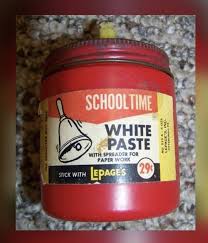
I loved making things in my Kindergarten classroom at Windsor School. We did lots of artwork with construction paper and paste. The paste came in jars with a lid that had a red spreading stick that went down into the jar. It was white paste and it had a smell I’ll never forget. It seems we went home with artwork every day and the classroom was decorated in our pictures and art for every holiday. I remember making paper chains. I remember the smell of crayons and using little blunt-ended scissors to practice cutting on the lines–straight or curved. I love the smells of a school room.
Vanilla Extract
My mom’s baking advice: Always double the vanilla in any recipe. When I was little, she always let me smell the vanilla bottle before she put the lid back on.
Burning Flesh
There was a year when everyone was getting warts. Warts were pretty common at school and Paul, Eric and I seemed to get them too, usually on our knees. Once I had a wart on the top knuckle of the little finger on my left hand. I had to go to the doctor to have it burned off. The smell of the burn was horrible but the scar it left was a life saver for me–it was and continues to be the way I tell my right hand from my left–I look for the scar. I always know which hand to look at, but I never know it’s my left hand until I see it.

Suntan Oil
We were sun babies. In the summer, Mom took us to the Reedley City Pool every day for swim lessons. We used Coppertone suntan oil when we were out in the sun. Mom loved the sun too. She grew up going to the beach in Southern California. Sometimes while we played, she would sunbathe in the back yard on our old lawn chairs that were heavy wood with wheels and thick cushion pads. I think they once belonged to Mom’s parents. Our newer lawn chairs were aluminum with woven slats. If you stood on them, your foot went through those slats. I loved the smell of suntan oil on our hot sweaty bodies. Later there were Hawaiian-smelling suntan oils that were heavenly.
Cheetos Cheese Flavored Puffs
Mom didn’t buy many frivolous foods when we were growing up. The two I remember were both only purchased for special occasions: pink and white Circus cookies with colored sprinkles went on every road trip, and Cheetos puffs went with us to the Roeding Park Zoo in Fresno every Easter Saturday when we had our Easter egg hunt and picnic with our Laemmlen cousins.
It was such a special picnic that from an early age, we called Cheetos “Zoo Smells,” because that’s what we associated them with. It wasn’t until I was much older that I realized that wasn’t their real name. The smell of them still reminds me of the zoo.
—————-
Now go back to the list you made. Write a bit about the memories that surround each scent or smell. Write about where you were and what you felt. Do those smells still exist in your today world? Can you feel those smells transporting you back in time? Are there any smells you hate you remember how certain favorite childhood foods smelled when you came into the kitchen?
Have a great week! Notice how the smells around your enhance your life!
Ann

Stonewood Writing Group
Week 38
11 June 2026
Hi Friends!
This week we’ll talk a bit about the sense of TOUCH and how to use this sense as a doorway into your memories. Memories of touch often carry feelings of emotion, comfort, fear, work, intimacy or belonging.
Make a list of experiences from your childhood that involved touch. As you have time, write a memory about each of these experiences.
A list from my childhood memories might include:
Going barefoot
The grass in our backyard
Running through alfalfa fields
Picking cotton
Sitting on Dad’s lap
Sorting the smooth buttons in Grandma’s button box
Warming backs by a fire
Christmas tree needles
Hanging tinsel icicles
Learning to knead bread
Itchy peach fuzz
Wet hair after swim practices
Brothers slugging me
Playing with felt pieces
The soft leaves of a violet plant
Sunbathing in the hot summer sun

Now make a list of things in your life right now that feel good or comfortable to your touch
My list might include:
Jeans and flannel shirts
A cool breeze
Wearing Crock sandals
Kneading bread dough
Folding fabric pieces
Sleeping under a quilt
Reading to a child on my lap
The keyboard under my fingertips
Clean teeth
Warm sun on my face
Sinking into a soft bed with clean sheets
Here are a few other ideas of things relating to touch that you might want to write about:
An inventory of scars on your body
The spanking
The slap
The hug
The handshake
A hand that comforted you
A hand you wish you could hold again
A hug you’ve never forgotten
The first time you held a baby
A time you were SO cold, or SO hot
Going barefoot
Mud
Sand
Snow
Grass
A stone
A splinter
A blanket
Sandpaper
A callus
Wool
Lace
An embrace
A first kiss
As memories come to you, jot them down. Then as you have time, write a word or two about them. Maybe by now you have a place in your journal or computer files for memory stories. These little snippets are fun to collect and save and when the day comes that you want to compile your personal history, you’ll have some interesting pieces to include in that story. They don’t have to be long, just describe what you remember.
Going forward, pay attention to the things that you touch in your life and what brings you joy. Think also about the people in your life who have touched you deeply. Was physical contact part of your experience with them? Pay attention to sensations that impact your life.
https://annlaemmlenlewis.com/2012/09/14/stored-fountains/
Here’s a piece I wrote about a friend who lost all sensation in her body and how she relied on her journals to remember what it was like to feel things. I learned a great lesson from her.
Let’s not take this important sense of touch for granted. As you write, take time to describe what you are feeling in the world around you.
Have a delightful week!
Ann

Stonewood Writing Group
Week 40
25 June 2026
Hello my dear Writing Friends!
This will be the last email for a little while. We have to be out of our home in 2 weeks and there is a lot to do between now and then. I’ll be focusing on preparing our home for our son, Adam, who is coming to move in with his family. We’ll be living in the Farm House in our backyard through the summer and fall, until our new home in NE Orem is completed. If I can get some emails sent, I will, but if I miss, please be patient until you hear from me again soon!
This week we are going to talk about our 6th sense: Intuition. Some might consider intuition a mysterious supernatural power, but I think of it more as an inner knowing—the quiet sense that nudges us toward a person, an action, a warning, or an opportunity before we can fully explain why.
Have you ever had a strong feeling to do something, call someone, change your plans, or pay attention to something—and later realized it mattered?
We might call this different things, like a hunch, inspiration, an inner voice, a gut feeling, a whisper of wisdom, a spiritual prompting, or divine intervention. Intuition is sometimes described as our sixth sense because it gathers information in ways our five physical senses can’t fully explain. Intuition usually speaks quietly in our hearts and minds, rather than loudly.
Intuition is our ability to know something without consciously reasoning through every step. It is an inner awareness that comes from past experience, deep observation, emotional wisdom, and often, for people of faith, divine inspiration or a heavenly prompting.
Intuition might come as a sudden thought or idea, a feeling of peace, a sense of caution, a persistent nudge, an image or memory or an unexplainable certainty. It is usually gentle rather than dramatic. You usually notice these sorts of promptings when you are quiet and paying attention.

African American mother and her two daughters serve meals to the homeless with their diverse family.
Sometimes intuition says:
Go.
Visit a friend.
Take a different route home.
Speak up.
Volunteer.
Sometimes intuition says:
Pause.
Wait before making a decision.
Don’t send the email.
Reconsider a purchase.
Postpone a trip.

Sometimes intuition says:
Notice.
Someone needs help.
A child needs attention.
A stranger needs kindness.
A memory wants to be remembered.
What does intuition feel like in your body? It’s different for each of us. Consider specific promptings you’ve had. Perhaps you felt calm, or had butterflies. Perhaps you had a warm feeling in your heart or a sense of peace. Sometimes you might feel an unsettled feeling, or goose bumps or you might have a thought you can’t ignore.
This week think about moments when you:
Suddenly thought of someone and then heard from them.
Felt strongly that you should make a phone call.
Changed plans for no obvious reason.
Helped someone because you felt prompted to do so.
Ignored intuition and later wished you had listened.
Followed a nudge that led to an unexpected blessing.
Had an experience you still cannot completely explain.
Here are some writing prompts. Choose several to write about this week:
Write about a time you had a strong feeling to do something. What happened?
Write about a time you ignored your intuition. What did you learn?
Describe the earliest memory you have of experiencing a “gut feeling.”
Has your intuition become stronger with age? Explain.
Write about a person who taught you to trust your instincts.
Recall a time when you felt inspired to help someone.
Write about a coincidence that felt meaningful.
Have you ever changed your plans because of a feeling you couldn’t explain?
Write about a moment when you felt protected.
If your intuition had a voice, what would it sound like?
What circumstances help you hear your intuition most clearly?
Is there a story from your family that has been passed down about a prompting or an inspiration?
We spend much of our lives listening to the outside world. Intuition invites us to listen inward. Whether we think of it as wisdom, experience, inspiration, or a spiritual prompting, these quiet moments often become some of the stories we remember most vividly. They remind us that paying attention can change the course of an ordinary day—and sometimes even a life.
Happy Summer!
Ann

Hello again!
I thought I might send an example of writing about an experience with intuition. This is a piece I wrote several years ago about an experience I had when I was a teenager. I still think about this particular experience, and I’m glad I captured it in writing. I’ve shared it several times with my kids and grandkids. They love to hear “the black widow story.”
https://annlaemmlenlewis.com/2013/10/29/black-widows/
You might think about times you felt prompted to pray for something (a lost item?) or someone (a family member you didn’t know was in trouble?) and your prayer was answered. These kinds of promptings (intuition) are some of the sweetest experiences we have and they deserve to be recorded.
Ann

Stonewood Writing Group
Week 41
15 July 2026
Hello Friends!
We have made our move over to the Farm House and we are settling in for the summer. It’s been great to have the kids and grandkids next door! Most of our stuff is still in boxes, but we are up and functioning!
This month is the 250th Anniversary of the Declaration of Independence. I’m sure we are all giving our religious freedoms some serious thought and that is something worth writing about. Take some time to record the things you are thankful for.
The week of July 4th, I was reading the Book of Mormon and came to 2 Nephi 1:5-7, where these words from Father Lehi were recorded between 588-570 B. C. (italics added):
5. But, said he, notwithstanding our afflictions, we have obtained a land of promise, a land which is choice above all other lands; a land which the Lord God hath covenanted with me should be a land for the inheritance of my seed. Yea, the Lord hath covenanted this land unto me, and to my children forever, and also all those who should be led out of other countries by the hand of the Lord.
6. Wherefore, I, Lehi, prophesy according to the workings of the Spirit which is in me, that there shall none come into this land save they shall be brought by the hand of the Lord.
7. Wherefore, this land is consecrated unto him whom he shall bring. And if it so be that they shall serve him according to the commandments which he hath given, it shall be a land of liberty unto them; wherefore, they shall never be brought down into captivity; if so, it shall be because of iniquity; for if iniquity shall abound cursed shall be the land for their sakes, but unto the righteous it shall be blessed forever.
Who were the first in your family to come to America? When did they come? Why did they come? Do you know their stories? If not, can you find them?
These promised blessings reminded me of a little family history project I wrote about several years ago, which I thought some of you might like to try. Here is the blog post:
Land of the Free and Home of the Brave
Posted on July 3, 2013 by Ann Laemmlen Lewis
Yesterday I sat down with my large family pedigree chart and I studied it. I took out a pad of paper and made a list of the ancestors in each line who were the first to come to America. It was fascinating. Here is what I found:
Rudolf Laemmlen, b. 1899, Germany to California in 1929, Grandpa
Elsa Schaefer Laemmlen, b. 1895, Germany to California in 1929, Grandma
John M. Smuin, b. 1852 England to Idaho as a boy aft. 1861, Great Grandpa
Emanuel Richard Lundquist, b. 1867, Sweden to Utah 1881, Great Grandpa
Karin Ersson Lundquist, b. 1832, Sweden to Utah 1881, GG Grandma
John Smuin, b. 1820 England to Utah aft. 1861, GG Grandpa
Jane Pursey Honey Smuin, b. 1822 England to Utah after 1861, GG Grandma
Theodore Turley, b. 1801 England to Canada to Missouri 1838, GGG Grandpa
Frances A. Kimberley Turley, b. 1800 England to Canada to MO 1838, GGG Grandma
Frederick Barker, b. 1800 England to Utah 1830, GGG Grandpa
Ann Blygh Barker, b. 1802 England to Utah 1830, GGG Grandma
Esther Hanna Pearce Smuin, b. 1797 England to Utah aft. 1873, GGG Grandma
Elizabeth Degen, b. 1802 Switzerland to Pennsylvania 1816, GGG Grandma
John Casper Degen, b. 1770 Switzerland to Pennsylvania 1816, 4th GGrandpa
John Henry Bushman, b. 1734 Germany to Pennsylvania bef 1766, 5th GGrandpa
Johann Wendel Georg Traut, b. 1689 Germany to Pennsylvania bef. 1739, 6th GGrandpa
Robert Jarrett, b. abt 1630 England to Virginia bef. 1694, 8th GGrandpa
Mary m. Jarrett, b. abt 1630 Ireland to Virginia bef. 1694, 8th GGrandma
Randolph Holt, b. abt 1607 England to Virginia abt. 1630s, 10th GGrandpa
What fascinates me the most is not just that they came, but that the hand of God is apparent in the movings and crossings of my people. These beloved ancestors came to a land of religious freedom where they could find and recognize truth. That truth was restored to this earth in 1830 by a prophet of God. With His divine help, that prophet translated an ancient text called The Book of Mormon. The people in this record were led out of Jerusalem by a prophet of God. They crossed the great sea and came to the Americas around 600 B.C. Their story is fascinating. Their teachings contain the words of Jesus Christ to the early inhabitants of the American continent.
With the exception of my grandparents, every single person on this list who lived after that restoration, soon found that truth and listened to it and chose to live in accordance with its teachings. Those who lived before that restoration, had descendants who found and joined during the early 1830s. And my father recognized it when he heard it when I was just a young girl.
My dear German grandparents lived on the farm next-door to ours. I visited them almost every day of my growing up years. My grandpa read and re-read his German copy of The Book of Mormon. He told me, “Everybody in the world should read this book and live by its teachings. If they did, this world would be a much better place.” He was right. He also recognized the truth found in its pages.
Now, many generations later, I look at this list of my ancestors and marvel that they all had one thing in common: they lived according to the Gospel of Jesus Christ as it was restored in our day. Part of me is absolutely amazed by that, but a greater part of me says, “Of course they did. Who wouldn’t, if they knew?”
—————-
This is a good time to take a look at your family and how you ended up here, in America. Go to FamilySearch and look for the stories of your ancestors. If stories you know are not posted there yet, add them. Learn what brought your people to this place. Do you have ancestors who were brought here by the hand of the Lord? Write about the things you learn. How do these things make you feel? How will your posterity be affected by those who came before you? List all the ways this makes you feel grateful.
I hope you’re having a delightful summer. I sure am!
Love from Ann

Stonewood Writing Group
Week 42
24 July 2026
Happy Pioneer Day, my Writing Friends!
In honor of the day, I’d like to share a talk I gave a few years ago at a DUP gathering. Maybe it will spark some ideas of ways you can celebrate this holiday in your writing lives.
Remember, you will be The Ancestor one day. How are you leaving yourself behind?
Love to you all,
Ann
“If we don’t tell them, who will?” Speaking at the Daughters of Utah Pioneers Fall Social
Posted on October 18, 2021 by Ann Laemmlen Lewis


Here are the notes from my comments:
18 October 2021
DUP Utah North Center Company, Fall Social, Orem
You are here because you descend from an ancestor who you love who did some amazing and hard things.
I wish we had time to learn how you came to know about your beloved ancestors.
Maybe some of you read journals or found letters. Maybe someone in another branch of your family posted a memory on FS. Maybe there are treasures that have been handed down in your family. Maybe you saw a photograph and wanted to know more. Maybe some of you found an archive in a library or online that documented things your ancestor did.
However you learned about a particular ancestor, I would guess knowing about that person has enriched your life in some way, has made you think differently about what you do and who you are, or has been an inspiration to you during a troubling time. In fact, knowing that ancestor has brought you hear today in this group called Daughters of Utah Pioneers.
As I started learning about my ancestors, and as I learned to love some of them very much, I developed a feeling–a strong feeling–that it is when I make an effort to know my ancestors and make a connection with them by understanding who they are and how they lived, that they are given or granted permission or access to me. I often sense the presence or influence of loved ones who have gone before. In most cases, I never knew them here, but have learned to love them since.
Some, like my Pioneer ancestors, I feel especially close to and I feel them particularly near. Perhaps these few are my guardian or ministering angels. Perhaps because I love and care for them, they return love and care for me. I believe in these ministering angels. I believe that our ancestors can be angels sent or dispatched to help us in times of need.
One day it occurred to me that the reverse might also be true. If they are granted permission to be near us because we know them, then might not it follow that if we “leave ourselves behind” in as many ways as we can (words, thoughts, records, journals, photos, etc.) so that our posterity might know us and love us, we will have greater access to them?
This thought has motivated me to do 2 things:
1. Find and know as many of my ancestors as I can (in order to feel connected to them).
2. Leave myself behind in as many ways as I can by recording and documenting my life with my own stories and history and photos (in order to be connected to my descendants some day).
Maybe some of you have perfect children and grandchildren who will need no future help or guidance or nudging. I expect my own might need some help. I want them to know me and love me so I can love them and have access to them.
100 or 200 years from now, when I am in another place, my children’s children will wonder about an old grandma named Ann who lived long long ago. They will wonder what it was like to live in Africa during a world-wide pandemic. They will wonder what it was like to be in a world with opposition and sickness and natural disasters. They may wonder how I felt about the political situation of our country, or about earthquakes and fires and floods that ravaged the earth. They will probably find it curious to read first hand accounts of moral dilemmas in my world. They will wonder what I believed and how I worshiped. They will wonder if I had faith in things I couldn’t see and why.
In that day, 100 or 200 years from now, when they read these things in my journals or in my history, I like to imagine that I will be watching them, perhaps arm-in-arm with one of my 3rd great grandmothers from Switzerland named Elizabeth Degen Bushman, who was one of my first life-changing ancestral discoveries.
Elizabeth and her family were taught the gospel of Jesus Christ by Mormon Missionaries in Lancaster County, Pennsylvania in the spring of 1840. They joined the Saints in Nauvoo, and were driven from their home in the cold and tragic winter of 1846 with six sick children in one wagon. Two of her little girls died and were buried in shallow graves along the roadside, unprotected from the wolves who came as soon as they moved on. Her son Jacob, who became my great great grandpa later wrote, “we done the best we could” as he describes covering his little sisters’ graves with branches and nearly freezing to death on that grueling exodus trip.
In her later life Elizabeth Degen Bushman became the good Samaritan of every village they lived in. She was an exceptionally gifted nurse and was renowned as the loving, successful midwife of the town of Lehi. Because of her reputation and kindness, it was said she served as midwife at the birth of almost every baby born in Lehi during her life there. Nearly every family in Lehi had an Elizabeth named in her memory.
The pioneer accounts in Lehi recorded that Elizabeth had the gift of tongues. Her dear friend, Mary Ann Davis had the gift to interpret. In 1878, on her death bed, Elizabeth offered a prayer in tongues that ended with these words to her family and to me:
“Oh my children and friends, be true to God and His work and He will take you through the gates of death and there will be a light in the valley for you. . . . Be faithful to the truth and all shall be well with you. We shall only be separated for a little season. God bless you all. Oh Lord, grant that my name may not pass into oblivion, but that it may be from generation to generation, because I have tried to keep Thy commandments. Amen.”
I’ve thought a lot about her prayer when she asked that her name might not pass into oblivion. I felt she was speaking directly to me when she spoke those words. I determined to discover her and remember her and preserve her story for others. And when I found her, I became determined to find others.
Let’s talk for a minute about that OBLIVION. Elizabeth prayed, “grant that my name may not pass into oblivion.” She did not want to be forgotten. Perhaps she also felt that being remembered would be her portal to my life.
Ronald O. Barney, a former Executive Director of the Mormon History Association who worked for 33 years as an archivist and historian for the LDS Church History Department said:
If you do not write your story, your name will be obliterated from the human record and you will not speak from the grave. You will not have any influence on those who come after you. Those who write about the things they have done and learned in life have a huge impact on posterity.
Write your story. You have overcome things your children need to know about.”
Here is how Ian Frazier, author of Family, describes his thoughts at his mother’s deathbed:
“Soon all the people who had accompanied me through life would be gone, too, and then even the people who had known us, and no one would remain on earth who had ever seen us, and those descended from us perhaps would know stories about us, perhaps once in a while they would pass by buildings where we had lived and they would mention that we had lived there. And then the stories would fade, and the graves would go untended, and no one would guess what it had been like to wake before dawn in our breath-warmed bedrooms as the radiators clanked and our wives and husbands and children slept.”
Betsy Byars, Keeper of the Doves:
“You know, there are poems, there are stories, whole books, about people who lived hundreds, even thousands of years ago. Those people still live because of words. Words! Words are the most wonderful things in the world. As long as there are words, nobody need ever die.”
30 November 2012 blog post:
Yesterday I received an email containing a priceless gift: a short life story of my great great grandmother, Mary Ann Pain Holt, who was born in 1840. I knew Mary Ann’s name and I had found a picture of her headstone in the Ogden City Cemetery. But I never knew her, until yesterday.
A distant relative I’ve never met found my name on a website associated with a man I know nothing about. He emailed, inquiring about information I don’t have. After explaining my relation to him and our Holt family, he replied yesterday, sending me several family histories, including one about my great great grandmother, Mary Ann.
For the first time in my life, I read words from her own mouth. There are
no words to describe the joy I felt as her thoughts became mine, except perhaps to say, “in that moment, heaven touched earth.”
What a miracle it is when hearts are turned by words alone! Oh the power of captured stories! The feeling I’ve had since meeting Mary Ann makes me want to write until my fingers turn to bone. I want to leave my stories, my thoughts, my dreams, my testimony of Jesus Christ. I want my posterity to feel what I am feeling right now–connected and loved.
I know that my Pioneer ancestors served and sacrificed things beyond my comprehension. I know now, the importance of finding their stories. I know that understanding their service and sacrifices will strengthen me, perhaps even save me in times when I may falter on my own. I know that I want to be worthy to stand arm in arm with them and some day be in a position to look down on my posterity with love.
Some of you may know the Storyteller, Donald Davis who is highlighted at our local Storytelling festival. I once attended one of his 2-day workshops at BYU and got permission for all of my FH students to attend. I asked anyone who took notes to send them to me to share with everyone else. One thing he said that almost everyone recorded was this:
“We are what we remember. If we don’t remember something, it’s as if it never happened.” Wow. That’s powerful and frightening.
When we record our stories, we are literally Saving Lives–the lives of those who live in those stories. When the memory is gone, it’s as if those events never happened, or those people never lived. We must save these lives, ours and those who have gone before us.
Now I’d like to talk a bit about the process of preserving these stories and leaving yourselves behind. I’d like to give you some fun and practical ways to approach preparing your personal histories, or perhaps how to approach finding and gathering and preserving the histories of others–the process is the same–for you, for a parent, a grandparent, or for your children.
Start with a Chronology!
Get a spiral notebook with about 100 pages in it.
On the first pages, make a list or outline of the things you’d like to include for each year of your life.
Review: Your Life Chronology handout
Then start with the year of your birth and continue the years until now, one page for each year. Sometimes it’s easier to fill things in backwards. Start with where you are now and go back in time, or jump around as you remember things. Carry the notebook with you and when you think of something, add it. This will be a very rough draft–a place to start remembering and jotting things down. It does not need to be fancy! (Describe interviewing children for their chronologies.)
Your Chronology will be like a table of contents for your life.
With that outline, you have a place to plug in your stories.
It helps you remember things and the sequence of things.
It helps you place events in perspective.
It’s simple to update at the end of every year.
As you start recording your chronology, stories will start coming to you that need to be recorded. You will have turned on the memory faucet!
Fun ways to get started writing things down:
Get together with friends or family members. Form a Writing Group. Cheer each other on. Share what you’re working on.
Write a Last Sermon/Last Lecture Series
(what would you say to your posterity if you only had 5 pages to say it?)
Complete description of yourself every 5 years or so
(Jacob Bushman near-sighted, Charlotte spoke fluent Spanish)
Letters to individual Children and/or Grandchildren
Find a box of old photos or an old scrapbook. Pick out some interesting photographs that tell a story. Write about what is happening in these photos. If you have a living parent or older relative, you might want to ask them to do the same. Prepare a few photos on pages with lines below that you can give to them. Ask them to do this for their grandchildren, or their posterity. (Show example)
Another fun personal history activity starts with one little piece of your chronology:
Pick a place you lived.
After listing the places you’ve lived or visited, pick one of those places.
It could be home, a school, a farm or neighborhood, grandma’s hhouse, or maybe even a church building.
Use the back of your notebook to draw your floor plans and maps.
Walk through these places and find memories of things that happened there.
Donald Davis said:
Once in a while we go around a corner and see something, or smell something, or hear a piece of music that brings back a flood of memories. These times are evidences that those memories exist somewhere. Our senses are storing little pieces of information in our minds like in an unformatted hard disc–all the information falls into our minds randomly. Our memories are stored in invisible files. One of those files is Places that are meaningful to you. Places where you slept at night. Places you visited.
Pick a place and explore– as you recreate the floor plan of the house or store or school or place or farm, the process of trying to recreate it will be like turning on a faucet of memories. The pencil will pull memories out, and then sharing those with others will bring out even more memories. Use drawing to pull things out of your memory–it’s a process rather than a creative end result.
Then start attaching “a time when” to the places in your drawings. Times when the unexpected happened, when things didn’t go as planned, times when there was a little “trouble.” Try to fill in with the actual names of people who were there. Keep going back and walking around until the names and details fill in the story.
Remember the furniture, the curtains, the shag carpet, what you did in the kitchen, the appliances. Remember the smells of those places–grandma’s house, the barn, the cellar, the closet. Use your senses.
Sensory Memories (Tell it Slant pp. 7-12)
We experience the world through our senses.
1. Smell
Smell seems to travel to our brains directly, without logical or intellectual interference. (Read the section p. 8 on smell)
Gather articles that you know carry some smell that is evocative for you.
One by one, smell them deeply, then write the images that arise in your mind.
(My mother’s purse, chlorine and swimming pools, rotting fruit, fresh manure, cut grass, cinnamon rolls.)
2. Taste
What are your comfort foods? What foods did you hate as a child? What are your mother’s favorite foods? Foods you ate at grandma’s?
Make a list of traditional family recipies
Childhood favorites? (Dunking Graham crackers & milk, donuts & berries)
3. Hearing/Sound
Are there sounds that surrounded your childhood? Trains, crickets, city streets, sirens, the noon whistle, Jump rope rhymes?
Are there songs or is there music that takes you back to particular times in your life?
What were the first albums, cassettes or CDs you owned and listened to over and over and over?
High School years, Single life (Fresh Aire in BYU Library), dating life, marriage? Play those songs and write what comes to you as you do this.
4. Touch –barefoot, grass, running through alfalfa fields, picking cotton, sitting on someone’s lap, holding grandma’s hand, warming backs by a fire, CMS tree needles, hanging icicles, tinsel
5. Sight –what we choose to see or not see often says more about us than anything else. When we “look back” in memory, we see those memories. Our minds have catalogued an inexhaustible storehouse of visual images. The trick is to remember those images in writing.
There are lots and lots of resources that have memory prompts you can write about. You can even search for them by topic on google.
For example, search:
Personal History Prompts
Journal prompts about Covid
100 Questions for Parents to Ask Kids
FamilySearch #52 Stories (self and family)
When I had FH students, I gave them assignments. Here are a few I would give you today if you were my students:
1. Locate a couple of Family or Personal Histories that have been written by your family members and read them. Think about things you are especially glad they wrote about or things you wish they might have included. Consider including these things as you make lists of things you’d like to write about for your posterity.
2. Get a notebook to carry with you. Work on a chronology of your life. Then start making lists of interesting things from your life that you’d like to write about for your posterity to read some day. What do you want them to know about you?
3. Think about the places you’ve lived. Try to draw floor plans of the various homes you’ve lived in. Go to those places in your mind and walk around in them. List the stories that come to mind as you do. You may want to find photos of these places to help you remember them.
4. In the next month, begin to write short stories about your life or experiences. You can pull ideas for these from your memories, or use personal history prompts. Pick things you would enjoy writing about. Set a personal goal for how often you’d like to record a story (one/week, more, or whatever you feel you can do). Think up a good reward for each story you will write!
5. Pay attention to the feelings you have about your ancestors and your connection to them. Now imagine yourself in their place and think about your descendants. Think about what you can do to connect the generations by being interested to those who have come before and by being known to those who will follow.
History In Danger
Parade Magazine, 22 June 2008, p. 11
According to a recent survey, fewer than half of American high school students know when the Civil War occurred. Pulitzer Prize-winning historian David McCullough weighs in about why this ignorance is a problem.
How important is history in the United States?
For at least 25 years, we’ve been raising young Americans who are, by and large, historically illiterate. The founding of our nation, the Civil War, World War II—they all should be common knowledge, but they are not. History has not just been pushed to the back burner, it’s been pushed off the stove.
Why does history matter?
Amnesia is as detrimental to society as to an individual. The historian Daniel Boorstin put it very well: “Trying to plan for the future without a sense of the past is like trying to plant cut flowers.”
What can we learn from the past?
That there is no such thing as “a self-made man or woman”—we all are influenced by people around us. That every action has consequences, and we have to be very careful about leaping to conclusions from first impressions. And that integrity and character do count in the long run. The idea that no one has ever lived in more difficult or dangerous times is untrue. Others have weathered more horrendous storms; we can take heart from them.
In closing, I’d like to repeat Ron Barney’s words:
If you do not write your story, your name will be obliterated from the human record and you will not speak from the grave. You will not have any influence on those who come after you. Those who write about the things they have done and learned in life have a huge impact on posterity.
Write your story. You have overcome things your children need to know about.”
I believe what he says is true. I believe family history isn’t a chore, it’s a joy. It’s connecting generations in ways that save us.
Thank you for having me here this morning.

Stonewood Writing Group
Week 43
August 2026
We returned last night from our traditional family vacation to Newport Beach in California. This year was the first in a long time that our entire family was together for an extended time. We return to the same villas and beaches and restaurants every year with whoever is able to join us. Because we repeat the same vacation, we have some pretty well-defined family traditions in that particular place.
Family vacations are fun to write about because the vacation itself is only part of the story. You go to different places with different family members and do things you don’t normally do. Often the best writing comes from recording the little things: who sat where in the car, what someone always packed, an argument at the hotel, a funny or bad meal, getting lost, a favorite roadside attraction, or the way a place looked through a child’s eyes.
It’s not always easy to discipline myself to write every day while on vacation, but at least try to take some notes each day, then before returning home, I try to write about what we did and the fun experiences we had together, with a few details about each family member.
If recording the whole vacation (current, or past) feels overwhelming, focus, instead, one small memory and explore it.
Start with the five senses:
What did you see first?
What did you hear—in the car, hotel, campground, beach, or restaurant?
What did something smell like?
What did you taste?
What did you touch—sand, a motel bedspread, a steering wheel, cold lake water, a warm picnic blanket?
What sensation from that vacation can you still remember in your body?
Sometimes beginning with a sensory detail unlocks a memory that wouldn’t come from simply asking, “What happened?”
Other ideas might be to pick one aspect of the vacation. Here are some examples:
The family car
Who sat where?
Who got the coveted window seat?
What did you take along to entertain yourselves?
What music played on the radio?
Did your family sing?
What snacks were always packed?
Did someone get carsick?
What did your parents say repeatedly during the trip?
What was the longest stretch of driving you remember?
Did you ever get lost?
What did you see out the windows?
What was the first clue that you had finally arrived?
Prompt: “I knew we were really on vacation when…”
What did your family always do?
Things we always packed
Places we always stopped
Foods we always ate
Games we always played
Things Dad always did
Things Mom always did
Things the children always argued about
Things we never left home without
Things that went wrong every single time
Things we did that probably seemed ordinary then but seem special now
The place you stayed (A hotel, motel, cabin, tent, grandparents’ house, beach condo, or family friend’s home)
What did the rooms look like?
Who slept where?
What did the sheets, towels, or bedspreads feel like?
Was there a swimming pool?
Did you eat breakfast there?
What did the bathroom look like?
What did you hear through the walls?
What was outside the window?
Did the place seem luxurious or disappointing to you?
What did that place mean to you as a child?
The food on vacation
List five foods you associate with family vacations. This might include:
Peanut butter sandwiches
Gas-station candy
Ice cream
Pancakes at a motel
A particular restaurant
Picnic lunches
Corn on the cob
Watermelon
S’mores
A parent’s famous vacation recipe
The vacation that didn’t go according to plan
The flat tire
The wrong hotel
The forgotten suitcase
The lost child
The rainstorm
The terrible restaurant
The argument
The car that wouldn’t start
The attraction that was closed
The time someone got sick
The time the family got completely lost
The times you would say, “We laugh about it now, but at the time…”
Make a “vacation inventory”
A suitcase:
A road:
A song:
A smell:
A snack:
A hotel:
A view:
A person:
A conversation:
Something I lost:
Something I found:
Something I feared:
Something I couldn’t wait for:
Something that made me laugh:
Something I wish I could experience again:
Here are a few Vacation Memory prompts:
The first vacation I remember…
The vacation I thought would never end…
The place I couldn’t wait to leave…
The place I never wanted to leave…
The best view from a car window…
The souvenir I treasured…
The souvenir I wish I had kept…
The photograph that brings the vacation back…
Something my parents worried about that I didn’t understand…
The funniest thing that happened…
The day it rained…
The night we stayed up late…
What my mother packed…
What my father did on vacation…
A vacation with my grandparents…
The vacation before everything changed…
If I could return to one vacation for one hour, I would go to…
A vacation you didn’t know it was a special time until many years later.

This last week, after recording the day-to-day fun we had, I made the following list in my journal of Random Trip Observations:
2-yr-old Caleb twirls his hair with his little finger just like his mom, Claire.
Aaron knows where Abbey is at all times. (Find Friends on his phone.)
Lenna Lew’s toes on both feet are still wonky.
Graham has webbed toes and had webbed fingers when he was born.
The kids are quick to offer to drive for John (they think he drives too slow).
Clark (9) finds windows of time to escape and go read (he’s re-reading Harry Potter #3).
Reese’s Puffs are the cereal of choice in Adam’s family.
Adam likes to put ice cubes in the milk in the bottom of his cereal bowl.
Caleb’s potty training is going well. He’s in “commando” mode this month (no underwear under his pants. We took a little porta-potty to the beach.
The big kids still pee in the ocean.
Adam and I both had the beginnings of cold sores. He prescribed drugs. It’s nice having a doctor in the family.
John stayed up late most nights to watch tennis highlights.
I stayed up late most nights to do German lessons.
The kids mock me for studying German. They think I am wasting my time.
I brought books, puzzles and games for the kids. They were left untouched. The beach and pool won every time.
The big kids worked out every morning at the gym before playing tennis.
Donut favorites: pink frosting with sprinkles for the little girls, apple fritter for John, cronuts for many of the big kids, maple bar for me, Clark loved his first maple bar too. Glazed are always a winner.
Margot (6) hid a quesadilla in the sofa crack so she could have dessert. We found it later.
The kids turn down the A/C. I turn it up.
Vivy (4) is very confident in the swimming pools. Margot (6) is becoming more confident.
2-year-olds, Lenna and Caleb float around without fear wearing “water wings.”
The 12 water squirters I ordered were a big hit.
Beach games: Kubb (knock down wooden posts), Spike ball. Water/sand drizzlers.
Sand castles never get old.
All ages use the boogie boards.
Beach snacks: string cheese, bananas, cheese balls, apple slices, goldfish crackers, kettle corn, peanut M&Ms, Chronic Tacos, and, of course, donuts.
I do not love being in a swim suit. The little girlies ask me if I’m pregnant.
Claire and Heidi ARE pregnant, very.
Root beer floats (RBFs) are always a favorite late night snack. (I do not like them.)
The Magnolia trees are blooming. Reminds me of my childhood.
Costco gas here costs $5.19/gallon.
Our kids all get along with each other and stay up late visiting.
This has been a good vacation.
We are getting old.
A family vacation is never just a trip to a place. It is a collection of people, ordinary moments, surprises, mistakes, conversations, smells, foods, and feelings. Those little things are the pieces our families will have fun remembering someday.
I hope you all are enjoying your summer vacation and time with your families and loved ones. Next week school starts, and it will be a good time to get back to some regular writing!
Ann
Stonewood Writing Group
Week 44
27 August 2026
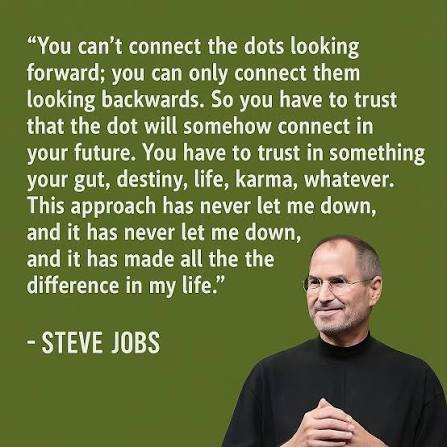
In 2005, Steve Jobs gave a commencement address at Stanford University. He told the story of dropping out of college and taking a calligraphy class that later influenced the design of the Macintosh. In this address he said:
“You can’t connect the dots looking forward; you can only connect them looking backwards. So you have to trust that the dots will somehow connect in your future.”
I have been thinking about this idea of dots connecting in the future. It really makes me feel excited, as I wonder what will come next.
We are in the middle of some big changes in our lives. We’ve sold our home of 33 years to our oldest son, Adam and his growing family. That home was the container that held our lives and everything we owned. Every cupboard and every drawer was filled with memories and STUFF. We had about 8 weeks to go through everything and thin it out, donate carloads, and pack up what we wanted to take with us.
We are living in the Farm House now, temporary housing right next door, while we build a new home in north east Orem, about 8-10 minutes away. The builder tells us our home will be finished in October. This week they finished putting up the sheetrock.
We’ve had a very busy summer. Some things in my writing life are far far behind and will need to be caught up. In time, I will write and back-date entries to fill in the holes.
But now, I am looking forward, wondering what our future will hold in a new place, with new neighbors and a new congregation of friends. Our lives will be a little simpler. I love dreaming of my new Family History office and a beautiful quilt room that will hold all of my projects.
And I wonder. What dots lie ahead?? And how will those dots connect to our past experiences?? What an exciting thing to think about!
I’ve just re-read the post below and updated it with a few more dots. This is the passage that prompted the post:
“As you journey back in memory, you’ll see your life whole. What may have felt at the time like a series of disconnected and chance events will take on a flow and coherence that only the passage of time could reveal. You’re able now to see how the consequences of a choice, perhaps made casually, rippled through the years that followed. You can see how a chance event led to other events that shaped your entire life. Memory, in short, can reveal the links, the connections–the story–of your life.
It’s hard to exaggerate the satisfaction this kind of insight can produce. It’s the satisfaction of feeling that your life, whatever happened in it, made sense.”
This quote is from the book called The Legacy Guide, Capturing the Facts, Memories, and Meaning of Your Life, by Carol Franco and Kent Line back (p. 3).
“I was in the middle before I knew that I had begun.” –Jane Austin
I am so grateful for the experiences I’ve had in my life. I see God’s hand moving me, leading me, and directing me. I trust Him and trust that the dots will continue to connect in my future. I can’t wait to see how.