A little Frankfurt Reunion

We are on the other side of the ocean now, and today we reunited with Frankfurt missionary friends here.  We drove up to Layton and had a good German meal with these friends.

Posted in Ann Lewis, Missions | Leave a comment

I’m Back! We are HOME from Germany!

We have been home from Germany for about 3 weeks now.  I’ve spent some time wrapping up my mission blog, Our Frankfurt Germany Mission, where more than 700 experiences and memories and trips are documented and preserved.  It feels good to safely tuck those memories away where I can return to them whenever I want to.

Now it’s time to return to Ann’s Words, where my home life experiences are recorded and kept safe.  I’ve spent some time this morning looking back at old posts and memories I’ve not thought about for quite awhile.  These memories are like gold to me.  I thought about the Memoir class taught by Ann Dee Ellis that I took at BYU in the fall of 2012, where we were given the assignment to start a blog and make at least 5 entries a week during that semester.  My very first post is here. I was not excited about the assignment.  I didn’t want to do it.  I didn’t have time, I didn’t read blogs written by other people.  I had enough on my plate.  But I was committed to completing school assignments, so I started.

For the record, here’s what has happened since the beginning of that semester in 2012:

Ann’s Words:  1,345 posts
Ann’s Stories (Family History):  811 posts
Our Washington Yakima Mission:  2,473 posts
Our Cote d’Ivoire Abidjan East and Bamako, Mali Mission:  1,017 posts
Our Frankfurt Germany Mission:  702 posts

That means this is my 6,352nd post (captured memory)!  It’s almost unbelievable to me.  If I were ever to see Ann Dee Ellis again, I’d probably kiss her feet.

I am grateful to you readers and friends from all over the world.  Just yesterday, visitors to Ann’s Words have checked in from 16 different countries.  Since I started writing here, I’ve had visitors from 245 different countries.  Quietly, we share our words and our thoughts and what is meaningful to us.

I’m grateful that (under some duress) I made that first post, and grateful that I kept going.  These words will outlive me, and the day will come that these words will define who I was, what I believed, and how I lived according to those beliefs.  Because of these words, my grandchildren, great-grandchildren, and all future generations will know me and know that I love them, think about them, and write for them.

Words are such a gift.  Preserving our words is so important.  My love to you all.  It’s good to be back.
Posted in Ann Lewis, Insights and Thoughts | Leave a comment

My Homecoming Talk (Germany Area Office Mission)

Ann Lewis Homecoming Talk 
Europe Central Area Mission
9 March 2025

As I thought and prayed about what sort of message to share today, out of the blue, the title of a book of essays I read years ago by Laurel Thatcher Ulrich and Emma Lou Thayne came into my mind. It was called “All God’s Critters Got a Place in the Choir.”

I don’t remember the particular content of the essay the book is named for, but I’m sure it had something to do with the thought that we are all important and we are all needed because each of us speaks with a different voice.

This line comes from a song written by Bill Staines and the first stanzas go like this:

All God’s creatures got a place in the choir
Some sing low and some sing higher
Some sing out loud on the telephone wire
Some just clap their hands or paws, or anything they’ve got now

Listen to the top where the little bird sings
On the melodies and the high notes ringing
And the hoot owl cries over everything
And the blackbird disagrees

Singing in the nighttime, singing in the day
When little duck quacks and he’s on his way
And the otter hasn’t got much to say
And the porcupine talks to himself

This song continues through the animal kingdom, describing how each contributes to the choir in it’s own special way.

Heidi sent this BeReal from St. Louis where they tuned in.

John and I have just returned from an 18 month choir trip in the Central Europe Area. I don’t have a fancy voice, but I have a voice, and I was able to use my voice in some interesting and significant ways–quite a miracle, actually.

Today I want to talk a bit about our individual voices, and how we are all part of a really important choir.

When we served in Washington a few years ago, one of my favorite messages to our missionaries came from the booklet;

Adjusting to Missionary Life p. 18
Serve from your strengths. Make a list of your strengths, talents, and spiritual gifts. Your strengths are part of the Lord’s storehouse, from which He draws to bless His children and build His kingdom. A crucial part of your mission is to cultivate your gifts and consecrate your strengths to help others come to Christ. Focus more on what you do well than on what you do wrong. Plan ways each week to develop and use your gifts to serve and bless others. (See D&C 82:18–19.)

I LOVE this counsel. It’s usually hard for us to say out loud what we are good at, but it’s important that we think about our own specific gifts and talents so we can figure out how to use them.

Heavenly Father created us. He gave us what we have. He made us who we are. He wants us to use our gifts to help or succor others.

King Benjamin, Mosiah 2:34; 4:16:
Ye are eternally indebted to your Heavenly Father to render to him all that you have and are.
And also, ye yourselves will succor those that stand in need of your succor; ye will administer of your substance unto him that standeth in need;

He’s pretty specific that what we have and who we are is important. And there are people who need those very things–not in general, but specifically from YOU.

Our job is to figure out our gifts and how we can use them. Our job is also to notice gifts others have and appreciate them, compliment them and praise them. Miracles happen as we combine our gifts, talents and strengths to bless our families, our companionships, our ward family, our neighborhoods, and the Kingdom of God on earth.

I get the feeling that Heavenly Father loves puzzles and putting pieces or people together. He forms choirs, he puts us in Friendships, Families or Wards or Missions because we have different voices and we are better together than we are by ourselves. Some sing high on the telephone wire, others sing low and some just clap their hands, or paws, or anything they’ve got.

Are you paying attention to what voice you bring to the choir?
Have you ever made a list of YOUR strengths, gifts, talents and interests?

Your Patriarchal Blessing will give you some ideas. Your mom or dad, friends, or spouse could probably suggest things they’ve noticed that you’re good at.

Go home today and start your list. Add to it as you think of things you enjoy doing that you’re good at. Then plan ways each week to develop and use your gifts to serve and bless others in ways that bring them to Christ.

Your plans might include ways of ministering here in the ward or in your family. They might even focus on family members beyond the veil. They might include missionary service at home or abroad.

Did you know you can go to the Missionary Portal and shop for service opportunities that match your interests? It’s really fun! You should try it!

As we served in the Central Europe Area, I found it quite remarkable that things on my list matched specific jobs that needed to be done there. I was needed to write articles and edit documents. I was a photographer. I created social media content. We got to speak German and serve in a small German branch. John and I got to serve and help our fellow missionaries, many of whom had never served missions before. And I got to spend my evenings doing German Family History research and temple work. The things we did were things we loved to do.

God blesses us with gifts. These gifts not only bless OUR lives, but they are primarily given to bless OTHERS’ lives. And they provide us with means and abilities to give back (we are so blessed).

I love this thought from Albert Einstein (very much like King Benjamin):
“Strange our situation here upon earth. Each of us comes for a short visit, not knowing why, yet sometimes seeming to a divine purpose. From the standpoint of daily life, however, there is one thing we do know: That we are here for the sake of others. . . for countless unknown souls with whose fate we are connected by a bond of sympathy.

“Many times a day, I realize how much my own outer and inner life is built upon the labors of other people, both living and dead and how earnestly I must exert myself in order to give in return as much as I have received and am still receiving.”

Your gifts are valuable and needed in the Kingdom of God on earth.

Elder Henry D. Moyle
“I have a conviction deep down in my heart that we are exactly what we should be, each one of us. . . . I have convinced myself that we all have those peculiar attributes, characteristics, and abilities which are essential for us to possess in order that we may fulfil the full purpose of our creation here upon the earth. . . .
” . . . that allotment which has come to us from God is a sacred allotment. It is something of which we should be proud, each one of us in our own right, and not wish that we had somebody else’s allotment. Our greatest success comes from being ourselves” (Improvement Era, December 1952, 934).

And, I might add, our greatest joy comes from participating in the choir, in fulfilling the measure of our creations, in adding our piece to the puzzle. It takes every “Critter” or every willing person. It takes us all and “If ye have desires to serve God, ye are called to the work” (see D&C 4).

I am grateful for the opportunities we receive to participate. I know Heavenly Father has gifted each one of us with particular strengths, interests, talents and abilities that are needed here and out in the world to bring others to Christ, to bring others joy, to bring understanding, to bring love.

Testimony
We are grateful for the opportunity we’ve had to serve in Europe. It was Marvelous and perfect for us.
And we are happy now to be home, back with our family and loved ones here. We are looking forward to the next choir number with all of you!

Here’s the entire song:

All God’s creatures got a place in the choir
Some sing low and some sing higher
Some sing out loud on the telephone wire
Some just clap their hands or paws, or anything they’ve got now

All God’s creatures got a place in the choir
Some sing low and some sing higher
Some sing out loud on the telephone wire
Some just clap their hands or paws, or anything they’ve got now

Listen to the top where the little bird sings
On the melodies and the high notes ringing
And the hoot owl cries over everything
And the blackbird disagrees

Singing in the nighttime, singing in the day
When little duck quacks and he’s on his way
And the otter hasn’t got much to say
And the porcupine talks to himself

All God’s creatures got a place in the choir
Some sing low and some sing higher
Some sing out loud on the telephone wire
Some just clap their hands or paws, or anything they’ve got now

Dogs and the cats, they take up the middle
While the honeybee hums and the cricket fiddles
The donkey brays and the pony neighs
The old grey badger sighs

Listen to the bass, it’s the one on the bottom
Where the bullfrog croaks and the hippopotamus
Moans and groans with a big t’do
And the old cow just goes moo

All God’s creatures got a place in the choir
Some sing low and some sing higher
Some sing out loud on the telephone wire
Some just clap their hands or paws, or anything they’ve got now

It’s a simple song, a little song everywhere
By the ox and the fox and the grizzly bear
The dopey alligator and the the hawk above
The sly old weasel and the turtle dove

All God’s creatures got a place in the choir
Some sing low and some sing higher
Some sing out loud on the telephone wire
Some just clap their hands or paws, or anything they’ve got now

All God’s creatures got a place in the choir
Some sing low and some sing higher
Some sing out loud on the telephone wire
Some just clap their hands or paws, or anything they’ve got now

All God’s creatures got a place in the choir
Some sing low and some sing higher
Some sing out loud on the telephone wire
Some just clap their hands or paws, or anything they’ve got now
All God’s creatures got a place in the choir

Songwriters: Bill Staines
A Place In The Choir lyrics © BMG Rights Management
—————

Here are some of our Yakima Missionaries who came today:

Bonus: (I didn’t use this talk, but loved reading it.)

Songs Sung and Unsung
By Elder Jeffrey R. Holland
Of the Quorum of the Twelve Apostles, 2017

I plead with each one of us to stay permanently and faithfully in the choir.

“There is sunshine in my soul today,” Eliza Hewitt wrote, “more glorious and bright than glows in any earthly sky, for Jesus is my light.” With radiance in every note, that marvelous old Christian hymn is virtually impossible to sing without smiling. But today I wish to lift out of context just one line from it that may help on days when we find it hard to sing or smile and “peaceful happy moments” do not seem to “roll.” If for a time you are unable to echo the joyous melodies you hear coming from others, I ask you to hold tenaciously to the line in this hymn that reassures, “Jesus listening can hear the songs [you] cannot sing.”

Among the realities we face as children of God living in a fallen world is that some days are difficult, days when our faith and our fortitude are tested. These challenges may come from a lack in us, a lack in others, or just a lack in life, but whatever the reasons, we find they can rob us of songs we so much want to sing and darken the promise of “springtime in [the] soul” that Eliza Hewitt celebrates in one of her verses.

So what do we do in such times? For one thing, we embrace the Apostle Paul’s counsel and “hope for that [which] we see not … [and] with patience wait for it.” In those moments when the melody of joy falters below our power of expression, we may have to stand silent for a time and simply listen to others, drawing strength from the splendor of the music around us. Many of us who are “musically challenged” have had our confidence bolstered and our singing markedly improved by positioning ourselves next to someone with a stronger, more certain voice. Surely it follows that in singing the anthems of eternity, we should stand as close as humanly possible to the Savior and Redeemer of the world—who has absolutely perfect pitch. We then take courage from His ability to hear our silence and take hope from His melodious messianic intercession in our behalf. Truly it is “when the Lord is near” that “the dove of peace sings in my heart [and] the flow’rs of grace appear.”

On those days when we feel a little out of tune, a little less than what we think we see or hear in others, I would ask us, especially the youth of the Church, to remember it is by divine design that not all the voices in God’s choir are the same. It takes variety—sopranos and altos, baritones and basses—to make rich music. To borrow a line quoted in the cheery correspondence of two remarkable Latter-day Saint women, “All God’s critters got a place in the choir.” When we disparage our uniqueness or try to conform to fictitious stereotypes—stereotypes driven by an insatiable consumer culture and idealized beyond any possible realization by social media—we lose the richness of tone and timbre that God intended when He created a world of diversity.

Now, this is not to say that everyone in this divine chorus can simply start shouting his or her own personal oratorio! Diversity is not cacophony, and choirs do require discipline—for our purpose today, Elder Hales, I would say discipleship—but once we have accepted divinely revealed lyrics and harmonious orchestration composed before the world was, then our Heavenly Father delights to have us sing in our own voice, not someone else’s. Believe in yourself, and believe in Him. Don’t demean your worth or denigrate your contribution. Above all, don’t abandon your role in the chorus. Why? Because you are unique; you are irreplaceable. The loss of even one voice diminishes every other singer in this great mortal choir of ours, including the loss of those who feel they are on the margins of society or the margins of the Church.

But even as I encourage all of you to have faith regarding songs that may be difficult to sing, I readily acknowledge that for different reasons I struggle with other kinds of songs that should be—but are not yet—sung.

When I see the staggering economic inequality in the world, I feel guilty singing with Mrs. Hewitt of “blessings which [God] gives me now [and] joys ‘laid up’ above.” That chorus cannot be fully, faithfully sung until we have honorably cared for the poor. Economic deprivation is a curse that keeps on cursing, year after year and generation after generation. It damages bodies, maims spirits, harms families, and destroys dreams. If we could do more to alleviate poverty, as Jesus repeatedly commands us to do, maybe some of the less fortunate in the world could hum a few notes of “There Is Sunshine in My Soul Today,” perhaps for the first time in their lives.

I also find it hard to sing sunny, bouncy lyrics when so many around us suffer from mental and emotional illness or other debilitating health limitations. Unfortunately, these burdens sometimes persist despite the valiant efforts of many kinds of caregivers, including family members. I pray we will not let these children of God suffer in silence and that we will be endowed with His capacity to hear the songs they cannot now sing.

And someday I hope a great global chorus will harmonize across all racial and ethnic lines, declaring that guns, slurs, and vitriol are not the way to deal with human conflict. The declarations of heaven cry out to us that the only way complex societal issues can ever be satisfactorily resolved is by loving God and keeping His commandments, thus opening the door to the one lasting, salvific way to love each other as neighbors. The prophet Ether taught that we should “hope for a better world.” Reading that thought a thousand years later, war- and violence-weary Moroni declared that the “more excellent way” to that world will always be the gospel of Jesus Christ.

How grateful we are that in the midst of these kinds of challenges, there comes, from time to time, another kind of song that we find ourselves unable to sing, but for a different reason. This is when feelings are so deep and personal, even so sacred, that they either cannot be or should not be expressed—like Cordelia’s love for her father, of which she said: “My love’s … richer than my tongue. … I cannot heave my heart into my mouth.” Coming to us as something holy, these sentiments are simply unutterable—spiritually ineffable—like the prayer Jesus offered for the Nephite children. Those who were witnesses to that event recorded:

“Eye hath never seen, neither hath the ear heard … so great and marvelous things as we saw and heard Jesus speak unto the Father;

“… No tongue can speak, neither can there be written by any man, neither can the hearts of men conceive so great and marvelous things as we both saw and heard Jesus speak.”

These kinds of sanctified moments remain unuttered because expression, even if it were possible, might seem like desecration.

Brothers and sisters, we live in a mortal world with many songs we cannot or do not yet sing. But I plead with each one of us to stay permanently and faithfully in the choir, where we will be able to savor forever that most precious anthem of all—“the song of redeeming love.” Fortunately, the seats for this particular number are limitless. There is room for those who speak different languages, celebrate diverse cultures, and live in a host of locations. There is room for the single, for the married, for large families, and for the childless. There is room for those who once had questions regarding their faith and room for those who still do. There is room for those with differing sexual attractions. In short, there is a place for everyone who loves God and honors His commandments as the inviolable measuring rod for personal behavior, for if love of God is the melody of our shared song, surely our common quest to obey Him is the indispensable harmony in it. With divine imperatives of love and faith, repentance and compassion, honesty and forgiveness, there is room in this choir for all who wish to be there. “Come as you are,” a loving Father says to each of us, but He adds, “Don’t plan to stay as you are.” We smile and remember that God is determined to make of us more than we thought we could be.

In this great oratorio that is His plan for our exaltation, may we humbly follow His baton and keep working on the songs we cannot sing, until we can offer those “carol[s] to [our] King.” Then one day, as our much-loved hymn says:

We’ll sing and we’ll shout with the armies of heaven,

Hosanna, hosanna to God and the Lamb! …

… As Jesus descends with his chariot of fire!

I testify that hour will come, that God our Eternal Father will again send to earth His Only Begotten Son, this time to rule and reign as King of kings forever. I testify that this is His restored Church and is the vehicle for bringing the teachings and saving ordinances of His gospel to all humankind. When His message “has penetrated every continent [and] visited every clime,” Jesus will indeed “[show] his smiling face.” There will be plenty of eternal sunshine for the soul that day. For this promised hour to come, I longingly pray in the name of Jesus Christ, amen.

Posted in Ann Lewis | 1 Comment

Different in Germany!

During the 18 months we’ve lived in Germany, I kept a running list in my phone of things that are different here.  After typing up the list, I asked my fellow ex-pats living here what they’d add to the list.  The list kept growing!  Below is our list of things noticed by about 30 wonderful women living for now in Germany:

Different in Germany!

Gas station pay–very few stations let you pay with a card at the tank.

Recycling–paper, wet waste, cans and plastic, separate glass into white, green or brown.

TP and tissues –bathroom hand towels are softer than TP, which is made from recycled plastic instead of paper. Tissues are also thick and heavy.

Small containers of food–people buy daily or weekly. Limited storage space in kitchens and refrigerators, so packaging is small.  Milk cartons are small. Staples are small. Costco products would never fit in German kitchens.

Grocery bags–bring your own, they are not provided. You can buy re-useable ones at the checkout.

Grocery cart wheels move in all directions. You insert a coin to take a cart. The coin is returned to you when you return the cart.

1.5% milk is the lowest fat content milk you can buy. Unrefrigerated shelf-life milk is commonly used.

Most people sleep under Federdecken (feather beds).  You only use a bottom sheet.  We sleep under 2 comforters and air them out.

Pillows are large and square or long and narrow.

Cold cereal–very limited choices. Maybe 10. Compared to 100s at home.

Chocolate aisle–100s of choices, compared to maybe 10 at home.

Cheeses, meats–oh, the variety!

Breads–excellent bakeries in most grocery stores, bread must be eaten fresh,  it has no preservatives and it doesn’t stay fresh long.

Grocery stores –in many , products are not organized by product types. It feels random. It’s often hard to find things.

Eggs are not refrigerated, even colored hard-boiled eggs sold year-round.

You seldom see brown dirt–grass fills every inch of ground. You only see brown dirt in a newly cultivated field.  Even along roads or freeways, the grass grows up to the pavement.

Lots of graffiti.

High walls along the Autobahns make it hard to see the countryside.

Bikes and bike lanes everywhere make driving difficult.

No grass turf–grass here is a wild variety mowed down.

Wildflowers come up everywhere.

Police and emergency sirens sound just like they do in WWII movies.

Crooked teeth–seeing someone with braces is uncommon. Dental hygiene seems poor.

Walking sticks are commonly seen, used by older folks.

Parking pay–it’s hard to find free parking anywhere. Most places require you to pay in advance (kiosks on the street), or pay when you leave (parking garages).

No right turns on red lights.

Blitz cameras catch you on film when you speed by. Traffic tickets come in the mail.  You can’t argue with the traffic department!

Streets and freeways are not lit at night. It’s SO dark!

At any given time you can look around and see someone smoking or vaping. They didn’t get the memo that it’s bad for you.

Checkers at stores sit.

Lights—up is off.

People love to honk.

Watch for cars coming up fast on the left lane on the autobahn.

Bikers popping out everywhere.

Mail delivered by postmen on pedal bikes.

No customer service.

Three-position doors and windows (closed, regular hinged opening or  vented from the top that tips open).

Many, many yogurt choices.

Veggies go bad faster (probably because they are usually local and fresher).

No garbage disposals.

Doors automatically lock behind you.

Biking in freezing cold weather.

Air conditioning is rare.

No regular Cheerios.

Lots of round-a-bouts and one-way streets.

Parking is horrible.

Dishwashers pop open to vent when they’re done.

Parking on the sidewalks or half on the sidewalks are very wide.

Muesli comes in many varieties and is the main cereal.

No screens on the windows. Fabulous windows that open 3 ways.

Appliances are narrower. Washing machines and dryers hold about half as much as American ones.  They have really long cycles. Dryers don’t vent so one must dump a water basin after each load.   Ovens: one cannot cook both cupcake pans side by side.

Caps on milk cartons are attached. And that’s an awesome thing.

There is shelf stable milk (H-Milch) and whipping cream (H-Schlag Sahne) which can be stored in the cupboard for 3-4 months.

Radiator in bath room doubles as heated towel rack. Love this.

Most businesses closed on Sunday, holidays, Saturday afternoons. Respect for workers and family time.

Gray haired people on bicycles.

Celestial room is quiet.

No tax on receipt because it’s included the sticker price.

Little tipping and it’s not a given.

Graffiti is mostly sports teams and political and not painted over.

Narrow parking spaces.

Small living spaces but lots of open or green space.

Wall flushes for toilets, with toilets mounted on the wall so you can mop all the way under them.

Fantastic water pressure.

Businesses take a “Winter Pause” for a few MONTHS after the busy Christmas market season.

Lots of hikers and wandering.

Contact with strangers involves negotiating which language to speak.

No teenaged drivers.

Unlimited speed on the Autobahns.

Some TP rolls have no core.

Doggie hook-ups out side stores.

People come to church on time and meetings start on time.

Most rent rather than owning their homes. Most use public transport rather than owning cars.

You have to pay for water at restaurants, and it costs about the same as a carbonated drink.

No ice!

Chocolate chips are hard to find and are a different shape.

Usually hot water is HOT!

Automatic blinds on the windows that go up or down or let a bit of light in between.

Baking powder, vanilla and sometimes baking soda come in small packets.

Kohlrabi is not only in the produce aisle, but also found at the checkout.

In narrow streets, you can park on the sidewalk. Some streets are so narrow you have to take turns with other cars to pass through them.

In the fall in the produce aisles, you can buy soup vegetables bundled together: celery root, carrots, leeks, other root vegs.

There is a lot of tea drinking and varieties of tea here.

Some grocery stores (like our Rewe) have a separate store just for the drinks.

Lots of varieties of bottled water. Lots of regional water.

So many choices of  fruit juices in cartons.

Agricultural areas are right next to residential areas.

Europeans eat with their fork in the left hand.

After an afternoon walk, bike or hike, you stop for Kuchen and beverage with friends.

People rent garden plots in specified areas away from their apartments and they spend lots of time there. The garden plots usually have a structure, sitting areas, water faucets and trees as well as vegetable and flower beds.

People purchase and display cut and living flowers in their homes year-round.

Self-pick flower fields with the honor system payment.

Fizzy/carbonated water is available from the tap at the office.

No Costco or warehouse stores or case sales.

Actually grocery sales are rare.

Germans will never take your credit card. They bring the machine to you.

There are bread slicing machines in grocery stores. You can pick the thickness you like.

In some parking structures, cars are parked in bunk beds to save space.

Apartments come with a caged room in the cellar for extra storage.

Buildings are constructed with concrete rather than wood. The blocks are so well insulated that you have to “vent” or open windows twice a day to refresh the air and prevent mold.

Stop lights turn yellow before they turn green. Stoplights are on the side of the road instead of above and in front of the car.

Sidewalks have 2 sides–a pedestrian side and a bike side.

Butter isn’t served with bread a restaurants.

Most houses and apartments do not come with a kitchen installed. You must install your own. The same with built-ins or closets. When you move out, you strip the house down to the bare walls.

Food like cereal or packaged items gets an ABC nutritional rating on the packaging.

Most foods do not have preservatives in them.

Cars have only one reverse/back up light.

There more than 20.000 castles in Germany!

Miss GPS will tell you to turn “half right” or “half left.”

You have to pay to pee. Most public restrooms require payment to open the stall door (up to 1 Euro = $1.00+).

Trucks that have a gross weight of over 7.5 tons (most semi trailer trucks) cannot drive on Sundays or holidays. So driving on those days is delightful.

German doctors spend more time with you, generally and they listen carefully to your concerns. They usually have you go into their office and after discussing your issues, then you move to a patient room. They feel this calms you down a little. Doctors also do more procedures like Ultra sounds, x-rays and drawing blood. You don’t see as many nurses or technicians.

The rotating toilet seats in the Autohofs along the Autobahns are amazing. We don’t have anything like that in the US.

There over 1,000 German traffic signs. In the US there are in most states only about 600.

Water fountains are non-existent, even in Phoenix Haus. There are two in the Frankfurt Temple, though. Most LDS chapels do not have a fountain.

Most LDS chapels in Germany have lots of windows, especially in the chapel.

If you want your whipping cream to whip and stay stiff, you need to add Sahnesteif (cream stiffener).

Italian food in Germany is much better than Italian food in the US, but not as good as in Italy.

Prescriptions come down a chute in little boxes, prepackaged in 30 or 100 punch out tablets. The boxes also have braille on them.

Every town has a church with a tall steeple, easily seen from a distance. Homes cluster around these churches. Often the church is in the oldest part of town.

In apartment buildings, the heat is turned off or down on a specific date in the spring and not turned back on until October 1st. Most homes and apartment buildings don’t have A/C.

Wherever you go you can usually hear church bells ringing.

Paper sizes are metric. 8.5″ x 11″ is not metric.

There is every kind of sausage imaginable, including cheese sausage.

There are grocery stores in malls.

Every car has a clock in the glove compartment that you put on your dashboard when you leave your car in designated parking lots, telling what time you started parking there. These lots have time limits and if your clock time runs out, you are ticketed.

When you go for a doctor’s visit, you are not given a cover-up for modesty. If you want to be modest, you have to take your own. (One of our Sisters sewed hospital gowns for every couple to keep in their car.)

At Christmas markets, you can buy a hot drink in a mug. If you return the mug, you get some money back. Every stall in a market uses the same themed mugs. Many collect them.

For Germans, wishing someone Happy Birthday before their birthday is bad luck (or opening a birthday card). When you have a birthday, you, the birthday girl, have to bring the treat to share with others.

There are fields of wildflowers all around us.

If you park in a way that annoys others, they will lift up your windshield wiper.

Posted in Ann Lewis | Leave a comment

Discovering My Degen Family in Hölstein

Here is a post from my Mission Blog, that I want to include here.  This really was a mission miracle!

Ann with Carla Huber

Last night as I was going to bed, I got the most amazing message on FB Messenger from someone I don’t know:

Dear Ann – Through RootsTech I found today our common relative Elizabeth Degen Bushman. I was so moved to find a LDS pioneer from Switzerland. My parents are both converts, so finding Elizabeth’s records filled me with so much joy! My family lives next to Hölstein, where Elizabeth was born. So it feels so close.   I also notice how many common friends we have on Facebook. Katharina Odavic is a longtime friend as well as Peter Huber. We both attended the same ward (Pratteln) for a long time. I just wanted to send my love and appreciation to you for everything you recorded regarding Elizabeth Degen. Best regards, Sariah Wiesner Knabe

With Sariah thinking I was in America, I sent this response:
How timely to hear from you tonight. We stayed with the Hubers last night and will stay with them again tomorrow night. Monday we’ll be going to Hölstein to see what we can see.
We completed an 18 month mission YESTERDAY in the Frankfurt Area Office and this week we are traveling to visit friends in Switzerland, including Katharina Odavic and Franz!
Maybe we could meet Monday??

So this morning, with Carla’s help, we had plans in place to go with the Hubers to Sariah’s home, just over the hill, 5 minutes away.  A miracle, really.  All day I’ve had a feeling that Elisabeth Degen Bushman is aware of our little family, and today Vivy in particular.

This is Sariah Knabe:

From my journal entry today:

So today was a pretty perfect day.  We went with the Hubers to Saraih’s home for Brunch.  They arranged it yesterday after I told Carla about Sariah’s message to me. It turns out that Saraih’s parents were in the Basel Ward, baptized shortly before John served there.  They were also invited and greeted us when we got there (they live in the next village over and are in the same ward).

Her parents are Franz and Yolanda Wiessner. They were so kind and really wonderful folks. Franz’s mother is a DEGEN. He was so excited to meet me too.  He came with copies of his family tree, copies of photos of his mother’s family and a copy of their last family gathering booklet.

It turns out that we are related in 2 different ways, in 2 of our family lines, but it goes back many generations. We suspect there is a closer relationship than what is showing, once we figure out how.

We had so much to talk about. There are about 10 LDS families now living in Höllstein (where Elisabeth Degen’s family lived–she emigrated with her father to America in 1816 when she was 14 years old), including the Bishop of their ward.  Höllstein is almost walking distance (up and over a hill) from Sariah’s newly built family home on the edge of the town of Lampenberg.  Sariah’s home is across the road from that little town’s cemetery.  There are also Degens in this little town and in this little cemetery, which we visited.

John and Ann, Jolanda and Franz Wiessner

Franz’s mother’s Degen family:

The Heinrich Wiessner and Anna Maria Degen Family

Fritz Wiessner (1899-1975) and Luise Buess (1907-1969)
Johann Jacob Buess and his wife and 2 daughters at their home in Kilchberg, Baseland. The farm came from her side of the family.

This photo shows a miracle.  Two days ago I knew nothing about these cousins.  Today I am here with them in my ancestral homelands.  It’s beautifully astounding to me.

While I talked Family History with Sariah, John reminisced about his days in Basel when Franz and Jolanda were there as newlyweds.

Out came their missionary scrapbooks, with missionaries John served with here in Basel.


We had a really wonderful time with these new friends. Their home is beautiful, on the edge of town next to rolling fields of farmland that will never be developed. Over the hill is Höllstein, where Elisabeth Degen grew up.

After wonderful visiting, we set out on a fieldtrip to visit the places our ancestors lived.  Peter Huber worked for an agricultural company many years ago and he visited the farmers here.  He knew which farms still belong to Degen families.   Everything about today was miraculous.

These are some of the Degen farms and the countryside in Höllstein:

We could find all the Degens in town on a phone app that shows land line phones in town and where they are located (after searching for Degen). Most of the old farms still have old phones.

The red-roofed home is where the Bishop now lives.

This is another member home:

The main street in Höllstein:

This is the Degen home on the main street that we discovered when we visited last year:

Ann Lewis, Sariah Knabe, John Lewis, Carla and Peter Huber

Then we went to the church and cemetery we’d visited last year and wandered there.  There are more complete photos of this church and cemetery here.

Knowing the way is good. Walking the way is better. Arriving at the destination is the best.

Gysin is another family name.

Cherries and wheat were common themes on the headstones.

Then we walked through town to the big factory where they make watches. Peter Huber told us all about the watch industry in Höllstein, and how the people here invented the machines that make the small parts and pieces that go into watches. They did this work in their homes during the winters when there was no farming. Then factories grew from the simple technology (water powered at first). Now there are many watch factories in this little valley. Peter also used to be involved with that industry and he knew all about it. He wore a “President’s Watch,” the model made for all of the Presidents of the USA for many years.

Then we drove to the other small towns in that area and saw the churches and felt the places. The valley is long and narrow, the towns not far apart. One of the towns called Bennwil was where the church records were kept (births and christenings were recorded there for people living in the surrounding towns).

The Bennwil Church

We drove through Niederdof, Oberdorf and to Waldenburg. There are watch factories in all of these towns. Peter said they also made woven silk ribbon  used in ceremonial and traditional dress and in the churches.

This is a farming area, with homes in the little towns along the main roads, a church in each town, then the farms are on the hills behind and around the towns. Many look like dairies with cows. You can smell them. Everything is green and beautiful, lush with plenty of water year-round. The roads were small, narrow farm town roads. Old and new buildings were a mix. Some dating back to the 1600s.

This is the church in Oberdorf.

This old building from 1658 has murals showing the occupations of the people here.

Ribbon weaving:

This is Waldenburg:

It was wonderful to see these places and to feel these places in this small valley. I loved every minute and it was wonderful to be with the Hubers and Sariah who grew up right here in this area and knew the history and knew their way around.  I felt SO HAPPY today, and Grateful for my ancestors who watch over us and our little family now.  Yesterday was a day of Miracles for Adam and Heidi’s family in St. Louis (see previous post).  Today was a miracle for us, to be here in these places with friends.

Posted in Family History | 1 Comment

Vivy’s Miracle

We woke up to this message from our daughter-in-law, Heidi in the night:

Vivian (2 years old) was hit by a car a couple hours ago. She is good, all things considered. We are in the ER with her and really, things are looking good. Scans and everything are slowly coming back but looking normal so far. Her cognition has been normal the whole time. Never lost consciousness. She’s got quite the road rash across her body. Pray for her but know she is ok!

Gratefully Adam and Heidi were both seconds away, but oh, what long seconds those were.  Both heard the breaks slam and squeal, then the heart-stopping thud.  They looked up to see Vivy’s little body lying still in the road, 20 feet from the car.

Here is Adam holding Vivy after checking for broken bones or internal problems, while they waited for the ambulance and emergency vehicles to come (7 came).

From Heidi:

My heart is feeling a gratitude that is indescribable. “Grateful” doesn’t begin to describe how we feel.  It could have been so much worse. So so so much worse. She’ll be her same little sweet self soon. Her body is going to be sore and scarred for a while but I’m so grateful that there’s no permanent damage to her body or brain.

My response:

Thanking all our angels in heaven for protecting her. Today we are in the Swiss homeplace of my 3rd great grandma who always watches over our family. I feel her near. Her name is Elisabeth Degen. We love you and are so grateful Vivy is safe. ❤ ❤ ❤ ❤ ❤ ❤ ❤ ❤ ❤


Update the next day at home watching princess videos–Vivian is doing so well.  She’s stiff and sore and doesn’t want to move too much, but she’s going to be fine.  Thank Goodness.

Posted in Lewis Family | 1 Comment

Clark: Free Come In

My 8-year-old grandson, Clark is in second grade this year.  His mom sent me this photo of what he hung on his door this week.  I am still smiling about it because I, GrAnn, am in the best column of all:  Free come in.  I LOVE CLARK SO MUCH!!

Posted in Lewis Family | Leave a comment

President Jeffrey R. Holland (3 December 1940-27 December 2025)

This morning at the cabin we woke to some very sad news.  Our beloved friend has died.  I’ve been thinking about him all day, remembering the lessons I’ve learned from him.  He is probably my favorite of all favorite Apostles.  I am really going to miss him.

Here are a few things I will always remember from Elder Holland:

“I Would Pretty Much Follow Elder Holland Into Battle, Anytime, Anywhere”

Evidence that I was here, that I loved and was loved.

This quote of his made a huge impact on me:

“I don’t know exactly how each of you should fulfill your obligation to those who do not or cannot always help themselves. But I know that God knows, and He will help you and guide you in compassionate acts of discipleship if you are conscientiously wanting and praying and looking for ways to keep a commandment He has given us again and again.”

Elder Jeffrey R. Holland: ‘Seek opportunities to care for the poor’

Hold Your Ground, Be True to your Faith

Posted in Insights and Thoughts | Leave a comment

German forests: my favorite place

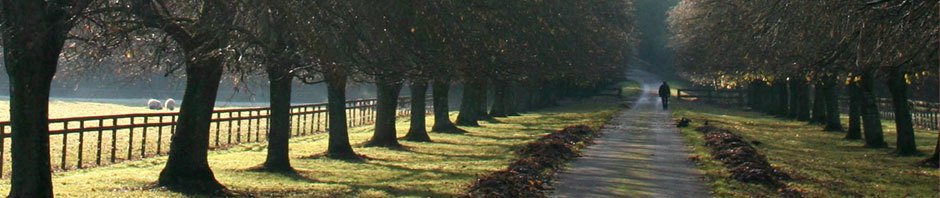
Perhaps my favorite places in Germany are the woods and the forests.  Most of the time we drive through them, but on occasion, we walk along paths on our way to a castle, or other remote historical site.  33% of Germany’s land area is forested with more than 90 billion trees–Spruce, Pine, Beech, Oak and Birch.  Fall is especially spectacular.

When I’m in the woods, I feel such great peace.  I love the sounds of the wind in the trees overhead and I love how the damp carpet of fallen leaves absorb the sound of my  footsteps.  I always want to linger in these woods, hearing the rustle of leaves, smelling the earthy decay of fallen branches, feeling the hug of the trees around me.  It all fills my soul.

Right now, I am reading a wonderful graphic (self-illustrated) memoir by a German immigrant, Nora Krug (b. 1977).

Wikipedia:  Nora Krug is a German–American author and illustrator. Her graphic memoir Belonging: A German Reckons With History and Home won the 2018 National Book Critics Circle Award in Autobiography, the 2019 Schubart-Literaturpreis, and the 2019 Evangelischer Buchpreis.

I loved how she describes German forests:

From the notebook of a homesick emigre
Things German No. 2 der Wald

A woodpecker; an abandoned hunting stand; fingers of light; vertical silence.  The forest makes me feel calm and protected unlike any other place.  It’s is the “forests in their silence” that have kept old fairy tales alive, the Grimm Brothers once claimed.  Their German Dictionary, begun in 1838, lists over a thousand nouns and adjectives containing the world WALD.

My favorite ones are WALDEINSAMKEIT (forest-solitude), WALDFINSTERNIS (forsest-obscurity), and WALDUMRAUSCHT (surrounded-by-a-rustling-forest). In 1852 the German Jewish author Berthold Auerbach stated that “French should be spoken at the salon, and German in the forest.”  During the 1936 Olympic Games, gold-medal winners were presented with a seedling of a German oak, a symbol for steadfastness.  Several of these so-called HITLER OAKS still stand in the United States today.  In 1938, the Reich’s propaganda minister Joseph Goebbels considered barring Jews from “German forests.”  As part of the postwar reparations, the French and British military ordered the massive harvesting of German forests.  In 1983, the term WALDSTERBEN (forest die-off) was included in the German thesaurus for the first time.  A wave of existential angst washed over the country.

I am loving this insightful and thoughtful personal history/memoir of a German in America who is reckoning with her past.  Her thoughts are not so far from my own.

Posted in Books, Insights and Thoughts | 2 Comments

Today I wear black.

Posted in Ann Lewis | Leave a comment